Thursday, September 22, 2005

The Clueless March Toward Oblivion

We, in all likelihood, are going to have significant shortages of
gasoline, Bush said. I would urge people to recognize this, not to
hoard.


That's Jeb Bush, Texas Governer.

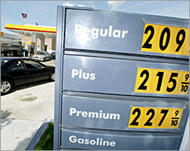
With analysts on cable news channels raising the possibility that Rita could push gas close to $5 a gallon, some Floridians on Thursday were filling up - just in case.

This is sure to have a flow on effect in New Zealand because the overall world wide surplus will diminish. Expect petrol to be out toward $1.60 within a week or two.

If you own one of those big fuck-off monster SUV's that guzzle gas - bad luck. If you've just purchased one, take a good look in the mirror, slap it with a cold spoon, acknowledge your own stupidity and get "chump" tatooed across your forehead.

I spend less than 12 bucks a week on petrol. An extra gold coin won't worry me much.

Oh sure, this is just a spike caused by a supply security. But, these spikes will become increasingly common as supply is unable to meet demand and minor supply constraints manifest on the international market.

The price of oil is only going in one direction. Furthermore, once that available supply is unable to meet demand (18 months) we'll see what we might call superspikes. That's when the ideological stupidity of the argument "the oil companies can't tell me what I can drive" will come face to face with realpolitik - will the market provide - oh sure, mind you the scarcity factor on Vespas will have significantly increased by then.

Thursday, September 15, 2005

The Long Emergency Begins

People obsessed with Britney Spears sprog and the lastest in the Paris Hilton hacker debacle obviously didn't notice that 2 major US airlines hit the wall this week. Two weeks after the US's all time biggest natural disaster the timing is ironic if not uncanny.

Hilariously TIME magazine reports "bankruptcy is not the end", ha, like death is not the end.

It seems like the only honest reports of these bankruptcies are coming from this side of the world. The US blinkered by NASCAR and the latest barbie doll drama are in total denial.

This is simply a correction based on the increasing scarcity of oil. More airlines will follow, and the next in line will be major megamarket stores.

Wednesday, September 14, 2005

Why I'll be Voting Greens.

I've never voted for the Green Party before although being a surfer, windsurfer, tramper, living with a Scottish father that grew all our vegetables, I remember getting a telling if I threw a banana skin in the bin and not the compost bucket. Being these things and more I guess I've always had a point of view that took into consideration ecology, conservation as in "conserving".

It was pragmatic, rather than "trendy". And so, it became common sense.

People often ask me what I am doing when I discuss Peak Oil with them. I am doing a lot.

Did I say I ride a vespa. The savings in petrol are financing the scooter. In a couple of years I'll have a lot more money in my pocket (more than Brash's tax cut would have put in my pocket actually). You think petrol prices will drop - think again.

Our entire house is double-glazed and we use two methods of super-efficient heat generation in the winter (heat pump and wood burner). The summer doesn't need anything other than opening the big bi-fold doors to keep us cool.

We have a Solahart Kf series solar water system. It makes financial sense, no conventional hotwater system pays for itself - the Solahart does. That's the Scot in me.

We've made all these investments out of our own pocket, because yes it takes an upfront investment for a saving in the long term. We are lucky most people can't afford to make the investment.

The Green party (energy policy here) are the only party that understand this stuff. Care enough about it to offer workable systems that will get other New Zealanders making these kinds of choices.

And they are the only party that will get into power that understand peak oil. The rest are a pack of delusional dreamers. Labour have only just (this week and in code) admitted that production peak of oil is a serious issue. They need the Greens for advice and direction. They need the Greens to continue to remind them.

If you care about this stuff, if understand peak oil. There is no other choice. Sell yourself out on Saturday for a pitiful 30 bucks a week in your pocket and temporarily cheaper petrol (to the tune of 2 or 3 bucks a week), or vote with your mind, for the future. Vote Green.

Remember, wishing a problem will just go away never works.

Steve.

Monday, September 12, 2005

"A Leader Must Have a Vision"
Don Brash, Leaders Debate (sometime last week)

Never mind if that vision is an apparition, you'd think the vision that Don Brash had was one of virgin Mary Mother of God indicating that oil will return to $35 a barrel.

I want everyone to think very carefully about this. The Brash/Key decision to cut petrol tax is nothing more, nothing less than a blatent cynical election bribe. Lets examine why.

1. The argument is that the cut is a temporary subsidy while petrol prices are high. Sure enough it's only been promised for 6 months. However current petrol prices are not temporarily high. In fact this is the beginning of a future where fossil fuel prices will only trend in one direction, up! The end of cheap oil is here, as all time global oil production maximises and demand continues to soar the scarcity factor in oil will only push the price higher. Unless significant (billion barrel +) oil fields are found, or demand significantly reduces no long term downward trend in oil prices will be seen. So, get used to it.

2. I have always argued that as the price of oil moves higher and as shortages begin to manifest lobby groups (such as motorist lobby groups, farmering groups, etc.) will complain vehemently for subsidies. Well, lo behold, the National party are the first pack of soft bellied politicians to cave into subsidy demands. Removing tax from petrol places the tax burden on all tax payers, including those like me (who rides a vespa to cut my petrol costs) and even more so, on those who use public transport, don't have a car, ride bikes, walk etc. Be fucking angry, you are now subsidising arseholes who drive Ford Explorers and Toyota Prado's - that really pisses me off.

3. The GST argument. John Key like the pot-licking economist he is argues that the extra GST collected by Government in higher fuel costs justifies the tax cut. This is a nonsense. Imagine you have a fixed 200 dollars of disposable income every week (hopefully you have more, but lets keep the figure simple) You have to share this cash round, so if you save a bit there, you might have a bit more to spend down Courtenay place on a Friday night. So, if you spend all this money the GST component is about $23. You will only NOT pay GST if you don't spend the money. There is absolutely no evidence whatsoever that higher fuel costs result in higher GST collected by Government. You simply have less (GST generating) money to spend on other stuff.

4. Higher fuel costs at this time are a clear signal to the market (and the individual) that alternatives are worth investigating. By reducing tax on fuel you are signalling back to Wanktank V8 drivers that it's ok to continue buring petrol with utter disregard for the situation we will shortly find ourselves in. There is no incentive for people to get rid of their global warmers in exchange for something more sensible (and fun) (like a Vespa), or indeed public transport. Thus we are exacerbating the problem, we are developing a false sense of security in the clueless herd. When really high petrol prices come ($3 a litre) what do you do then?

5. We need this tax to begin to build infrastructure that does not depend directly upon fossil fuels. National (United no Future and ACT, but they are now irrelevant) are sadly totally delusional about the future of energy. Outer suburban lifestyles and happy motoring freeway lifestyles are reflections of a century of prosperity predicated upon cheap accessible oil. That time is over. Instead of trying to recapture the glory days we need to get realistic and begin building a future that is not oil dependant. We need to begin doing this now.

If you are clever, if you have any wetware between the ears you'll see National's ploy for what it is. You will realise that reducing the petrol tax is not only pointless but counter-productive to dealing with the end of cheap oil.

Steve McKinlay
for PowerLess NZ.

Thursday, September 08, 2005

Two Very Good Peak Oil Articles

Having a break from writing, here are two excellent articles worth reading.

Peak Oil and the Working Class By Dale Allen Pfeiffer

The Peak Oil Crisis: The Storms of August By Tom Whipple

Steve.

Sunday, September 04, 2005

Institutionalized Plonkerism
and if bullshit was bitumen...

Unbelievably following the virtual destruction of New Orleans and surrounding towns people still don't get it. Whining like a fucked diff, the combustion engine lobby are all collectively screaming for fiscal relief at the petrol pump, the lastest joke is the email going round asking drivers to boycott service stations today. As if that is going to make a jot of difference. If you don't buy your petrol today, you're just gonna buy it tomorrow. I guess the project of dumbing down of the general populus is still on track.

Don Brash, should he seize power in 11 days time, intends giving back New Zealander's billions of dollars in tax cuts (so they can all go out and buy new Ford Explorers and plasma TVs) meanwhile borrowing billions more to build a ridiculous and (by the time it's complete) largely pointless maze of roads in Auckland. Ironically arguing by creating wider more complex set of traffic problems - this will increase ecnomic growth.

What Brash is utterly and contemptously ignorant of is the fact that the days of the daily drive from your cosy suburb 40 kilometres from Queen Street is all but over for people on less than 80k a year.

Cheap oil is finished, and in the face of blindingly obvious warnings (Katrina, Gulf of Mexico - taking out 20 odd offshore oil rigs, petrol $1.55 a litre, oil - increase in price 500% since 1998, peak oil predicted by 2007) people STILL DON'T GET IT.

The rapid (within 48 hrs) descent into a contemporary state of nature in New Orleans would no doubt have Hobbes turning in his grave. It serves as a sober reminder that we are at any point in time 2 to 3 days away from utter distruction and despair.

You can bet the next argument for a rise in the oil price per barrel will be the shortage now emerging in the US strategic reserve as it taps into that stockpile (reckoned to be close to 800 million barrels) to bail out whinging motorists having to pay 3 bucks a gallon.

Even Mallard is on the bandwagon, arguing we here in NZ should conserve gas to help our good friends in the States. Anyone that seriously believes this will make a difference is delusional.

New Zealand uses much less than 1% of the entire petroleum usage world wide, any saving we make will be counted as a miniscule fraction - a real number preceded by several zeros. You wanna feel good. Take the bus to work one day this week, call up the Red Cross and donate 10 bucks. Then thank your arse you live in New Zealand.

Thursday, September 01, 2005

NFI Award Winner of the Week

Delusional thought continues unhindered as petrol and oil prices continue the endless march skyward.

The NFI award this week must go to...
Christchurch Holden Enthusiasts' Club President John Miller.

"Miller, who drives a 5.7-litre Holden SS, acknowledged that he owned a petrol-thirsty car, but said he should not have to give up his passion for petrol company 'greed'. "

Petrol price rises prompt backlash

Wednesday, August 17, 2005

New Zealand Ponders Peak Oil

The power of accurate observation is often called cynicism by those who have not got it.

George Bernard Shaw.


As we all race to convert the fictitious new capital in our properties into Toyota Prados, LCD screen TVs, and package holidays to the Gold Coast cluelessness in regard to the global energy/economic situation continues unabated.

The single most important ingredient for economic growth is increased energy consumption yet most New Zealanders including a sizable gaggle of dense politicians are yet to make this connection. Energy is the capacity to do work, no energy, no work. Yet energy is taken for granted. At least it has been until about now.

As the price of a barrel of oil continues to march skyward those with a modicum of wetware between the ears have begun asking “why?” There are various ways to answer this question for now I’m sticking to a simple explanation and it can be expressed in a single word - scarcity.

Rampant demand growth for oil across the developed and transitioning economies can simply be translated as desire. Our collective desire for all manner of techno-gadget consumer products, McMansions, V8 SUVs, speedboats, individually wrapped plastic packaged food, weekend recreational shopping and tropical holidays, that is, our greed driven desire for material success grossly exceeds our ability to be happy with what we have got. We are alcoholics to utility maximisation, drunk on instant gratification and heavily in debt because of it. If consumer products were drugs we’d all be lining up at the door of the Salvation Army.

The reason the price of oil is so high is a direct result of out of control desire effectively increasing the scarcity of the resource. The fall of the iron curtain and consequent proselytization of western style individualism and democracy throughout the world has created unprecedented levels of desire for more and more “stuff”. And the only way to ensure we get to
have this stuff is through continued economic growth. The demand to burn increasing amounts of oil necessarily follows.

Thus, as a consequence some might argue of the exploding global capitalistic society within which we live, it is ourselves that have driven the price of oil to its current level. Don’t blame the oil companies blame yourself. And if enlightenment philosopher David Hume was correct in that “all conflict springs from scarcity” the roller door to the double garage of self-destruction has already been opened. Iraq and Iran both swim on a sea of oil and everybody wants it. We want it so bad we are prepared to die for it.

If the current price of petrol, indeed oil were not enough to irritate you, dampen your economic confidence, the looming spectre of “Peak Oil” is certain to rain heavily on the current consumption parade.

We are almost at the point at which half the entire global endowment of oil has been consumed, discovery of oil peaked in the 1960s and despite all technology and the scouring of the earth for more, discovery has steadily declined since. Today we burn almost 84 Million barrels per day. Andrew McKillop an energy economist, argues we will be lucky to increase this figure to a maximum 90 Million barrels, at this point increasing depletion and continued demand will offset new discovery – we’ll be going backwards. With demand growth running at about 3 million barrels per year the current economic world party is likely to last at most another few years – maybe another term of Government.

Already many of the world’s large iconic oil regions are in decline, the North Sea, Norway, arguably or very soon Saudi Arabia. By the end of this decade the western industrial world will descend into a surreal hyper-scarcity miasma. If you think petrol is expensive now, just wait another year or two. Supply of the black oozy lifeblood of the economy will begin shrinking by about 3% per year. Economic growth throughout the western world will end abruptly as hyper-inflated oil prices become structural shortages! Hume’s conflict will manifest itself at the service station as well as the streets of Baghdad.

Some New Zealand politicians (Greens, Labour although it’s not admitting it yet) have already realised this scenario is just around the corner. Some with all the hubris of schoolyard bullies continue to laugh about it (ACT, National, United Future). With an election looming PowerLess NZ invites New Zealanders to make the distinction. Simply email your politician and ask them how they are planning today for peak oil – building more roads obviously is not the correct answer (nor for that matter is dropping out of Kyoto). Don’t accept feel good newspeak answers.

The remainder of this decade will be increasingly defined by energy or a lack thereof. Voters ought to consider this issue seriously; our collective continued well being depends on action now. Well prepared, New Zealand could be well placed to weather such a storm but preparation will require intensive national effort in order to dramatically reduce our dependence on fossil fuels. This election make the right decisions so that the effort can begin.

Steve McKinlay for
Powerless NZ
18 August 2005

Sunday, August 14, 2005

David Lange 1942 - 2005
The Giant Totara Has Fallen.


Photo - Photopress, Dean Purcell

Wednesday, August 10, 2005

Inspired Leadership (fuckwittery) By the New Zealand Government

Projection of short-term Brent oil prices in the December Update are based on futures prices at the time of finalising the forecasts. This sees a gradual decline in prices to US$43 per barrel in March 2005, and to US$40.50 per barrel by March 2006. By the end of the forecast period, the oil price is projected to reach US$35 per barrel...
Source - New Zealand Treasury, Economic Outlook

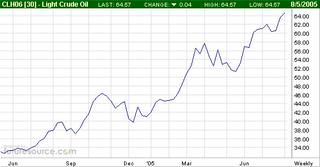
September 2005, Light Crude Delivery, NYMX (US$65 today)

Tuesday, August 09, 2005


Oil, Mental Retardation and Alcoholism
Transmission Gully Axed!


Maurice Williamson, contendor for the NFI Award of the week, Champion of the Order of the White Elephant either has the same problem as the alcoholic; denial. Otherwise he has some form of mental retardation.

Heather Roy, (ACT) a clueless bimbo with as much understanding of energy as a rodent running on a treadmill might have to share the award with Maurie.

And, Peter Dunne (United no Future), must win the sheer stupidity award for hilariously calling the axing of the Transmission Gully idea as "sheer arrogance", for that's what it would be to go ahead with the nonsense.

Somewhat ironically I often see the United Future big fuck off 4WD global warmer driving round Wellington burning barrels of oil plastered with "United Future Loves the Environment" stickers. It reminds me of quasi-greeny, hairy armpitted soccer mums, their V8 Toyota Prado's parked in the Organics Shop Carpark loading up with organic chooks, GE Free NZ stickers proudly displayed on the rear windows.

As oil prices hit record highs of US$64 a barrel overnight and Goldman Sachs and other investment bankers predict prices out towards $100 a barrel within the next year or so, spending billions building more roads (such as Transmission Gully) is as clueless as opening an Ice Supply store at Scott Base.

In the face of stark facts and admissions of Peak Oil now portrayed by both Chevron (Will You Join Us.com) and ExxonMobil (In The Outlook for Energy: A 2030 View, the Irving, Texas-based company forecasts that oil production outside the Organisation of the Petroleum Exporting Countries, the cartel that controls three-quarters of the world's oil reserves, will reach its peak in just five years) ACT, United No Future and National are completely out of touch with what is occuring within the oil industry, and what the implications are for the McCrapola consumption driven disposable world we live in.

These cognitively dense, mostly unfit, overweight gits all assume either some cheaper more efficient alternative will be provided by the market, or that oil will drop back to US$20 a barrel and the good times will continue rolling. A vote for either of these parties is essentially the nod to waste billions of tax payer dollars on white asphalt elephants.

Oil at US$20 a barrel - Unfortunately it ain't never gonna happen again. There are alternatives to oil. You can peddle your bike to work, you can run your car on greasy chip oil, but none of the alternatives come at a cheaper price, nor are they more efficient than oil.

Oil is the pinnacle of the flawed supply side market ideology of endless substitution. There are no more efficient, cheaper alternatives. We've hit the top of the curve.

If as Colin Campbell suggests peak oil will occur around 2007, beyond then we will begin to experience structural supply deficits. NZ being at the end of the supply chain and no longer best buddies with the US and Australia can expect to experience shortages quickly.

Violence, no not in Iraq but at the petrol pump will be the first manifestations of serious problems. Dickhead politicians the vast majority of which have ignored the problem will begin jumping around like slaters in a frying pan appealing for calm and that they have the situation under control.

I applaud the Government and Transit NZ for pulling the plug on an exercise in complete stupidity (Transmission Gully). Not only would the NZ tax payer be still paying off this concrete ornament 15 years after no one can afford to drive on it but a billion dollars would have been spent in an attempt to increase suburban sprawl when it could have been put to far more productive future proof use (such as increasing intelligent sustainable transit options).

ACT (a historical and political curiosity after September), National and United (one term wonder) Future are men (and women) of a bygone era. An era of abundance. We need a new way of thinking about our world. A way of thinking that understands the relationship between energy, our economy and the way we live.

Voting for ACT, NZ Future or National at this years election is like shutting your eyes at a busy intersection as you pull out, hoping no one will hit you. These parties are still drunk on the excesses of the 90s. In denial about the present and totally clueless about creating a sustainable future for New Zealand.

Steve McKinlay
PowerLess NZ
c2005

Monday, August 01, 2005

January 06 Delivery Sweet Crude hits US$64

Sunday, July 31, 2005

The Hirsch Report - Missing in Action

Global Public Media report that the controversial "Hirsch Report" into Peak Oil has disappeared from the internet

In Brief: Half a year after its release, the Hirsch report is nowhere to be found. For several months it was archived, in PDF format, on a high school web site (www.hilltoplancers.org, Hilltop High School in Chula Vista, Calif.). On July 7 the report disappeared from that site. The Atlantic Council (www.acus.org) is considering publishing the Hirsch report; however there is no projected date of release. When contacted, Dr. Hirsch replied that the document is "a public report, paid for and released by DOE NETL, and that it therefore could be reposted at will."-By Richard Heinberg

Good news. I have an original copy of the Hirsch Report, (PDF format, 1.2mb). If you want it leave me comments and I'll send it out to you.

Steve

Wednesday, July 27, 2005

Fucktard Studies in Globalisation

Trolling the pages of a little text on "Strategy" trying to find interesting snippets for my students I stumble upon this clueless example of complete ignorance by Eric Hobsbawm, The New Century .


We are certainly a single global economy compared with thirty years ago, but we can say with equal certainty that we'll be even more globalised in 2050, and very much more in 2100.

Interestingly Hobsbawm blindly stumbles vacantly passed the actual issues that make his claim a nonsense, in the very next sentence he argues,

Globalisation is not the product of a single action, like switching on a light or starting a car engine.


The coffee I was slurping at the time involuntarily regurgitated itself as if of a mind of its own. By 2050 much of the industrialised petroleum dependant McBullshit that we are all familiar and comfortable with will be decimated. The seemingly endless march of container loaded shipping moving raw resources to China, turning it into the shit we buy at the Whorehouse (Warehouse in NZ, Walmart in the US) and shipping it back here, will have slowed to a trickle if not completely disappeared.

Severe and brutal energy shortages the result of demand for oil surpassing the available supply are possible within a few short years, certainly within a decade. The price of oil will be so high airline companies will collapse, construction of Olympic villages will halt and projects for new roads will finally be seen for what they really are - a complete and utter waste of resources, investment in a possible world which will not exist. Rampant inflation and recession will infect the western economies like a virus.

We live in times of energy abundance, there is more of virtually everything you can imagine. The general public, Hobsbwam and millions like him ignorantly assume that the economic good ole times will roll on forever. Such fantastical notions make a raft of errors all related to fossil fuel availability and demand.

In 45 years time contrary to Hobsbwam's seemingly utopian "global village" we will be living in a time where there will be almost half the fossil fuel supply currently available. With a decline in the commodity that literally drives the western world so too will come the gradual reversal of all that depends upon the resource. Globalisation, along with populations will decline.

The price of fossil fuel continues to increase. Yet no one seems to blink an eye. The warning signs are lost on politicians and the general public. Consumptive society, it's inherent dependancy upon 3% economic growth per annum, fueled by oil, is in for one fuck of a shock. The end of corporate globalism, financial and property markets, and the beginning of political mayhem, extended austerity and hardship is just around the corner.

Better to buy a scooter now.

Steve McKinlay

Sunday, July 10, 2005

The 'A' Bomb In Wardour Street

Where the streets are pave with blood,
With cataclysmic overtones,
Fear and hate linger in the air,
A strictly no-go deadly zone,
I don't know what I'm doing here,
Cause it's not my scene at all,
There's an 'A' bomb in Wardour Street,
They've called in the Army, they've called in the police.
Paul Weller, 1978

I think there are two thoughts we ought to seriously consider in respect of the terrorist bombings in London last week.

Firstly, much media commentary has, in my opinion, vaulted to the naive conclusion that the bombings are Islamic fundamentalist (Al Qaeda) retribution for the UK's involvement in the war in Iraq. A seemingly obvious corollary to this position being that because New Zealand was not involved in the invasion of Iraq we would not be considered a target by Al Qaeda, JI or other terrorist cells operating in our vicinity.

Two issues aside immediately, firstly that New Zealand actually has troops based in both Iraq and Afghanistan, in this sense we are involved whether we like to think we are or not, and secondly multinational Islamic terrorist groups had been executing terrorist attacks for at least a decade prior to the invasion of Iraq.

Nevertheless it is a tempting position to hold, a kind of simplistic justification that somehow makes sense of the carnage and at the same time immunises ourselves from having to face the possibility that it could ever be possible in this country. Yet those holding this belief, I argue, are missing the point. Furthermore, the complacent belief that we could be immune to such threat ought to immediately raise questions about the nature of such a belief and what it might be based upon.

Rohan Gurnaratna, author of Inside Al Qaeda: Global Network of Terror, points out that since 9/11 Al Qaeda's network within the Asia-Pacific has remained virtually intact. Cells had been particularly active in the Philippines and Malaysia and it is now common knowledge (since Bali) that Jemaah Islamiyyah (JI) was inflitrated in the early 90s and is the face of Al Qaeda in our part of the world. The current spiritual leader of JI, Abu Bakar Bashiyar lives in Indonesia. JI was formed by Abdullah Sungkar and after his death in 1999, Bashiyar his closest friend took over. It was a meeting between Sungkar and Osama in Afghanistan that spawned JI (Gurnaratna, 2002, p189).

Australia and New Zealand's isolation offer some natural level of protection however the very nature of our liberal democracies offer up vulnerabilities not currently exploitable in nations with now much tightened level's of security. Just as the terrorist threat moved beyond the Middle East in the 1970s and 1980s, and with rapidly developing technological global communications terrorist cells could operate with relative ease in both New Zealand and Australia. Our inherent ideological weakness (a free liberal society) combined with a growing terrorist threat in Indonesia, Malaysia, Philippines and Singapore make our part of the world according to Gurnaratna, Al Qaeda's new theatre.

And the point is this, it is not the invasion of Iraq that is the direct cause of any, least not recent terrorist activities, it is our way of life, it is the excesses, degradation, arrogance and freedom of western styled democracy that is the target of fundamentalist Islamic terrorism. The absense of Islamic shari'ah law and the substitution of man-made civil law looms large in the mind of an islamic extremist. Those burying their heads in the sand about possible terrorist attacks in New Zealand ought to rethink their position. Terrorists are opportunists. And New Zealand is rapidly rising up the list of liberal democracies that present clear and tangible opportunities.

One blunt response I heard last week as news broke of the terrorist attack in London was this - "who cares?". Thus the second consideration I ask readers to think about begins with these headlines today;

Suicide Bombers Kill 34 or 21 Killed, Scores Wounded in Baghdad Bombing


You might find a small article buried away in the recesses of your local newspaper, a search on Google News turned up plenty of links, most weren't running this as a cover story. You could run the argument that Iraqi deaths aren't as important as British deaths, or perhaps more acutely, that the information isn't as interesting or relevant.

But then, who really cares right?

Wednesday, July 06, 2005

Governments Pork-Barrel Roading Policy
...and NFI Award Winner of the Week

It’s election season right, let’s roll out the pork-barrel. Such can be the only conceivable reason this Government on election hogmanay, as the sun sets on the era of cheap oil, decides to invest millions in an infrastructure that has absolutely no future.

Oil hovers around US$60.00 per barrel and is predicted by many analysts to exceed US$80 as a northern hemisphere winter descends with all the demand surge that will bring. The “price of oil” has all but hijacked the G8 summit in Edinburgh as the issue of the day. And why, because world leaders are slowly beginning to realise that without it [oil] there is no economy. Tropical storms Cindy and Dennis will surely see oil push out beyond $65 within the week.

Yet our Government still of the belief that oil will return any day now to US$25 per barrel continue to wish and hope that the good old happy motoring days of unending economic growth and suburban utopia will carry on regardless. Meanwhile we stupidly encourage more and more people to migrate to xurbia, the far-flung extensions of the suburban dream and drive for an hour and a half everyday to work in the 70’s platform shoe equivalent of the motor vehicle, the SUV. Driven by showpony wankers, as necessary and relevant as the millenium dome, these vehicles (and the desire to own such global-warmers) need to be eliminated.

The unsympathetic truth is that the more roads we build the greater our problem will be in the long run – it’s money that could have been spent preparing ourselves for an era of extended austerity. Cheap abundant oil is all but over. The price of oil is moving in one direction, upwards. From now onwards oil will increase in price at a rate far in excess of inflation. Much to the chagrin of the demi-gods of capitalism – economists, there are no alternatives.

Roads will not become gridlocked with solar and hydrogen powered vehicles as the National party suggest,


we would be happy to receive any material (from you or from
anybody else) suggesting that the forms of alternative energy that are already
developed will somehow reduce the need for proper roading


Bryan Sinclair, Special Advisor to Don Brash, in email correspondance April 2005)

(NFI Award Winner this week)
Just as blissfully ignorant, Peter Dunne of United (No) Future for thinking that building the multibillion dollar white elephant (the Transmission Gully road) is an idea even worthy of rational debate.


This project would barely be finished as oil prices begin causing serious economic and social impacts across the industrialised world. The days of sitting in a car for three hours a day to and from work will be long gone before Transmission Gully is completed let alone paid for. A fact that will be reflected in this years election results, United Future (along with ACT) are an increasingly irrelevant party that haven’t moved out of the 20th Century, operating on assumptions that most of us let go of a decade or more ago.

Steve McKinlay for
Powerless NZ
07 July 2005
PowerLess NZ is a growing group of scientists, energy analysts and concerned citizens whose principle objectives are to alert both Government and the general public to New Zealand’s looming energy crisis. Our aim is to support development of renewable energy resources at both a private and public level, as well as encourage a firm move away from dependence upon fossil fuels.
More information about global peak oil and resource depletion can be found at http://www.oilcrash.com and
http://ontic.blogspot.com


Thursday, June 30, 2005

The Kiwi Dream and the End of Economic Growth

Freezing cold across most of New Zealand this week and Auckland electricity spikes upwards of 94% odd utilisation. Move demand beyond the available supply and who knows what happens - perhaps substations trip and then how do you bring them back on line. Maybe you get brown-outs? I'm not sure, no one has really talked about that.

You'd think this kind of usage information would be a wake-up call but instead we get the usual suspects ranting and raving turning the situation into a political wank-fest. Everyone wants their drive-in recreational shopping lifestyles to continue but no one wants 90 metre pylons or wind turbines obscuring their view of gorse covered hills. The rampant desire for continued economic growth is pushing infrastructure and resources to the limit - something will break sooner rather than later.

We are a country living beyond it's means. As people cash up the fake wealth in their properties in the form of revolving credit deals, personal loans and credit cards to rush off to Noel Leeming to get the latest LCD flat screen TV's we end up posting the largest annual trade deficit since the mid 1970's - and we all know what followed that period.

Our greed for more consumer products the democritisation of shopping is reinforced with National's poll surge. John Key (national) (multimillionaire) promises to let the good times roll - massive tax cuts - so we'll all have an extra 5 pints worth of coinage in the pocket ultimately at the expense of services, health and education. Consumption is good. Buy more stuff, throw more stuff away, just spend, consume and waste more - it's what keeps us all in jobs, and it keeps the country growing. A few more hundred thousand immigrants will also ensure that the Capital Valuation on your home will continue to increase - thus, you can up the limit on your gold card to get that new 3G mobile blackberry or that winter trip to Fiji you wanted.

The oil price continues to creep endlessly upwards, beyond $60 per barrel this week, meanwhile the Government assures us it will at some point settle back at around 20-30 a barrel. Of course the high price in oil has seen the emergence of all manner of viable alternatives just as the economists assured us. (yeah right)
I guess in the absense of food in supermarkets cannabilism will emerge as an economic substitute proving that the market truely does work.

The election this year I suppose will at least provide some cynical entertainment. Both sides desparate to peddle a business as usual picture. Go get a bucket of hot and spicy, you have everything to be fat and happy about. The good times are expected to roll for at least another 12 months, by which time oil could be out towards $100 a barrel, United (NO) Future and ACT will both be political and historical curiosities, and as it stands there is a good chance that Labour and the Greens will be in opposition.

Meanwhile the love-hate relationship between National and NZ First will be busily building an infrastructure that looked good in the 1990's. Roads, more roads and a few more roads, with increasingly dimishing numbers of people able to use them.

You can't expect our politicians to be aware or prepared for the troubles ahead. They are seduced and blinded by the dogma that economic growth is the solution to everything. Whereas, any voice of reason will indicate that their solution is precisely the problem.

Economic growth will halt once oil reaches some magic figure. ($120.00 barrel??). At that certain point those living in xurbia, the far flung reaches of our suburban dream, will no longer be able to afford to travel to work. At this point or very near to, general societal structure will collapse. Xurbian property prices will plummet taking with it large sectors of the real estate market and mums and dads geared to the limit on their revolving credit accounts. Inner city shoebox property will skyrocket causing something of a hyperinflationary effect, the resulting lahar will plough through the mortgage industry. Stock market melt-down will cascade into retirement funds, managed portfolios and hedge accounts - watch the fallen brokers fly from multistory building windows as they did in 87.

All this plunging NZ into an economic recession from which we will never emerge.

Enjoy your day.

Steve McKinlay

Wednesday, May 25, 2005

Net Energy Gain and Photo Voltaics

In the early days of PV cells NEG (Net energy gained) of their production was actually below 1. Today it is above 1 but no-one knows by how much as the effective productive life of a PV cell is not known. The most modern estimate is that after 2 years service a PV cell has equalled the energy required to manufacture and install it.

This summation (2 years of service of PV use equals amount of energy used to manufacture it) of course doesn't take into consideration the historical evolution in research and infrastructure required and related to development of PV technology, mineral refinement and extraction, technological and economic viability of associated supply industries and plant required to manufacture PV. Let alone the massive costs associated with educating, transporting and supporting the humans that are needed to make PV.

We have PV cells because we have a fossil-fuel economy. Without oil, we never would have discovered PV, because the social economic culture that has enabled industry, research and levels of education to soar to the point where we could develop PV technology would never have existed in the first place.

The formulation below assumes a factory to build PV is in place and a truckload of refined silica is sitting in drums waiting to be turned into PV cells by someone with a priori knowledge about how to build them. All this with no prior consideration of how all that stuff got to be there in the first place.

And this assumption, totally devoid of any holistic knowledge about the nature of why our society exists in it's present form is this precisely the problem.

Steve.

Tuesday, May 17, 2005

On Being Quiet!

One might wonder, why the silence? I can tell you. In two weeks I'm off on a junket tour of Sweden, Scotland and England. Specifically, Vasteras, near Stockholm, Sweden for the E-CAP (European Conference on Computing and Philosophy). I am presenting a paper entitled "Can Knowledge be an Immutable Data Type? The limits of the model theoretic approach". More than happy to provide more detail for those interested. But, I'm getting ready to expose my credentials to a bunch of professors of philosophy. This is the real world!

In the mean time here is something for those hanging out for a peak oil rant.

This was the result (my result) of an exchange with someone who was interested in my provision of a solution for Peak Oil. Actually, that's not entirely fair. This was my ranting and raving. Simple as that. I place no blame on any individual that asks me any question - I am the one with the problem.

Society is fine. Continue consuming at your leisure!
The reality of all those people (consumers) is called real-politik. The change required goes right to the heart of democracy. You have to do away with democracy if you want things to change, because inherent in democracy is individual freedom and property rights. These rights will have to be foregone in a new world.

The minute you or I or some politician tells someone else what they can do and what they cannot do with their own property, whether that is land, resources, labour whatever you have lost some of that freedom that democracy holds so dear, that what is yours is yours to sell or do as you wish with.

All this is about is people trying to make money. It's just that now we have an entire global system supporting that aim. As long as this system is in place resources will be exploited at ever increasing rates. Try telling a mother in Bangladesh that she cannot feed her children because it's immoral to fell forests so she can graze her animals. So what do you do about that - ship in grain by container from the first world. That's not a solution, that's the problem.

What is it that you can possibly do - bring in laws to stop the importation of all that stuff we buy from Bond and Bond, the Warehouse, Noel Leeming... Do we prevent people buying cars and living in suburbs? Where to you house people if you are not going to let them live in suburbs? City Ghettos? The average wage in NZ is less than 35,000 - most people on this kind of money live from week to week. All they are concerned about is paying the bills and feeding their kids. It's a treat to them to afford to buy a Playstation for Christmas for the kids, it's a treat to them to have MacDonalds and hire a video in the weekend. What do you do, take this away from them? Tell them they have to go back to cross stitch and macrame - for gods sake most of these people can't read anyway, they don't go the library for entertainment they turn on the TV - the TV tells them to buy stuff, and if they don't they are losers.

Changes only happen in the face of extreme adversity. At the moment there is nothing like this. NZ is experiencing the highest level of employment and economic growth since before the last oil crisis in the 70s. Nothing will change until 450,000 people are displaced, unemployed. Nothing will change until it costs more to fill your car each week than it does to pay your mortgage. Nothing will change.

Jo if I can't convince scientists that there are severe problems ahead what hope do we have of convincing people living on the breadline in Naenae, or middle class familys with 2 BMW's in the garage mortagaged to the hilt, their kids at Queen Margaret and Scots college living in Khandallah. They don't care. To them it's all bullshit, all they want is a better life. Energy - that is someone elses problem, they pay their taxes, they expect water to come out of the tap when they turn it on, they expect the light to go on when they hit the switch.

I'm mostly disinterested in trying to change the world - you drive yourself mental trying to do that. I'm interested in peak oil from a sociological/anthropological point of view. If I provoke one or two people to think about it, then that's great. The solution to peak oil is well beyond my comprehension, I can't even be bothered thinking about solutions. The only solution I see actually panning out is for the worst to happen, because only when this happens will the entire perversity that we call civilisation that has taken 4 generations to build be destroyed. At that point we can begin to look at how we might live, post industry.

Maybe this is a proposed solution.

Increase petrol tax by 300% incrementally over the next 3 years
Use the money to double rail infrastructure across NZ
Increase road tax (rego) on all vehicles larger than 1200cc - quadruple it at least.
Make vehicles less than a 1000cc and motor bikes etc exempt.
Ban all imported vehicles immediately over 1200cc
Reduce speed limit on open road to 60k
Stop all new suburban development
Stop all immigration immediately
Impose massive tariffs on all imported goods - basically take out all the mega-shopping chains and encourage localised production again.
Implement compulsory NZ wide permaculture and market gardening regimes/education
Force suburbs to become to some extent self sufficient in food production, energy generation, water supply
Stop all new road projects
All international trade deals are off.
Implement emergency food rationing (because at this point you will have made a lot of people unemployed)
Implement full scale command economy. Unemployed people have to move to argricultural areas and begin that kind of work or get harshly reduced benefits. Government control where resources get spent etc.
Stop all tax dollars going into arts/cultural/sport... DOC programmes, limit all research funding to appropriate areas.
Can both TV1 and Maori TV (a massive waste of resources) - use radio as a news/information medium.
Impose voluntary repatronisation for new immigrants - back dated to say 1990.
(NZ will have to reduce it's population)
Introduce 1 child policy
Increase student fees to cover all costs for non-essential education. (That is English Lit and Athenian Coinage courses will no longer be funded by the taxpayer - this money will be needed to build new infrastructure/rickshaws and grow food.

Now that we have implemented a soviet like state, we'll need to encourage and coerce people to participate in this new utopia.
Introduce government implemented education schemes, praising the virtues of the new system.
Teachings will include discouraging class distinctions, a leveling of society where doctors and farmers are held in the same esteem.
In this uptopia we will also have to have a strong military/police presence because there will be descenters.
However, the good news is that most of the highflyers - those people with big fat houses in Roseneath and Remuera will move to Australia or somewhere else.

Within 5 years if well planned (but lets face it this is logistical nightmare) we'll be using a similar amount of fossil fuel to what we were using before the second world war. Society will resemble that time too. It will take generations for the resentment to fade tho. Violence will most certainly increase. The transition will be extremely harsh. BUT - when the US, the UK, Australia and Europe are all in full scale collapse, NZers will be whinging but living somewhat sustainably.

Steve McKinlay
PowerLess NZ.

Wednesday, April 13, 2005

Peak Oil and Mirage Realism
PowerLess NZ Press Release. 13 April, 2005

Realism is the philosophical notion that what our scientific theories tell us about the world are more or less, or approximately true. Scientific theories are generally considered to be the pinnacle of human knowledge. Although ultimately fallible and always up for revision the scientific method for discovering knowledge has, certainly in the West been shown to be instrumentally reliable. If the “realist” gets ill, the “realist” is more likely to visit a medical doctor than a soothsayer or faith healer.

Normatively then we might argue at least that being a realist is a position one might hold if one believes that the knowledge forwarded by our best theories is approximately true. This claim presupposes that we look toward science for answers to questions we might have about the natural world. To some extent being a realist is a matter of pragmatics. Panglosian arguments held by politicians and economists may serve to comfort us but such reassurances rarely stand up to logical scrutiny, natural laws or scientific evidence.

Optimists amongst us are plentiful, and their reassurances are familiar however, merely wishing or hoping something to be true, particularly in the face of evidence to the contrary, doesn’t make it true. We might call this position “mirage realism”. We explain and present two examples but first some background.

Oil production worldwide is close to peaking. That is, we are close to the point where the all time maximum amount of oil can be pumped from the ground. After this point it is expected that oil production will decline at a rate between 3% and 7% per annum (suggested by the empirical evidence provided from existing oil fields that are already in decline). The evidence for “peak oil” as it is called is indisputable. Oil production in a variety of regions and states that are now in decline can be predictably graphed as a bell shaped curve. The first significant example was when the United States peaked in 1971. More recently the North Sea, with Norway close at its heels have peaked and are in permanent decline. Collectively the world will follow soon.

A prominent mirage realist to emerge in recent weeks is Larry Baldock, transport spokesperson for the United Future NZ party. Mr Baldock proudly announced his plans to lay asphalt in the form of a big wide double laned freeway from Kaitaia to Invercargill. Either Larry Baldock is ignorant to the issue of peak oil, an issue that the prestigious Deutsche Bank argued last December ought to be of primary concern to forward looking politicians and company chiefs, or he is wishing it will simply go away. His ignorance does not excuse his culpability but to the mirage realist bullshit is bitumen – sadly under the spectre of peak oil a single cent spent on such a project is an investment in an infrastructure that has no future. We suggest a name change for Baldock’s party. United No Future.

Yet another mirage realist to stick his neck out this week was National’s Bryan Sinclair, Special Advisor to Don Brash leader of the opposition. We think Don Brash ought to consider seriously any future advice from Mr Sinclair given this comment in an email exchange on the subject of peak oil.

…we would be happy to receive any material (from you or from anybody else) suggesting that the forms of alternative energy that are developed (and there are obviously a number of these, already in development, including solar powered road vehicles and hydrogen powered road vehicles, but two examples) will somehow reduce the need for proper roading.
(Bryan Sinclair, April 2005)

We can only assume Mr Sinclair has decided not to participate in our knowledge society (at least certainly not the knowledge society that is predicated by any received rendering of logic).

Consider the following. Given that spaghetti junction is already gridlocked (every rush hour) with internal combustion engine vehicles, and Mr Sinclair seems to be arguing that either a demand or supply reduction in oil would not reduce the requirement for building more roads it follows that if we do not build more roads, spaghetti junction will become gridlocked with hydrogen and/or solar powered vehicles. Mr Sinclair’s mirage realism seems to extend to the ridiculous myth that the endless expansion of global economies is physically possible. Sinclair seems confident that human ingenuity combined with market forces will meet any forthcoming energy crunch or environmental emergency.

The futuristic scenario from mirage realist Bryan Sinclair will never occur because the energy equation for both hydrogen and photovoltaic solar cells results in marginal if not negative net energy returns. It takes more oil equivalent energy to make a solar cell than the cell ever returns in its lifetime. Hydrogen requires large amounts of natural gas, which we are currently running out of.

The demand for roads is directly connected to oil and the internal combustion engine. Less oil will result in less demand for roads. As oil becomes expensive and scarce and as we experience shortages, much to the National Party’s dismay cars will disappear from roads.

The godfather of mirage realism has to be the International Energy Agency (IEA) whom in the face of recent prices near US$60 a barrel oil, claims by OPEC that they are pumping at capacity, evidence that the mighty Saudi Arabian fields are peaking still hope and wish that oil will peak in 2037.

However just in case, the IEA are preparing a special report due to be released in a week or two that aims to prepare member nations (which includes NZ) about the need for urgent and extreme energy conservation measures if the worlds oil supply is disrupted or reduced by one to two million barrels per day (we currently consume 84 million barrels per day). Such bizarre measures suggested by the IEA include bans on privately owned motor vehicles, reduction of the working week and imposition of lower speed limits.

New Zealand’s energy minister, the Hon Trevor Mallard, currently frantically keen to comply with the IEA’s strategic 90 reserve day requirement by building dozens more oil storage silos will want to seriously consider the IEA’s latest report since he will be the one breaking the news to New Zealanders that “Carless Days” is not a Mexican folk singer.

Steve McKinlay
for PowerLess NZ